


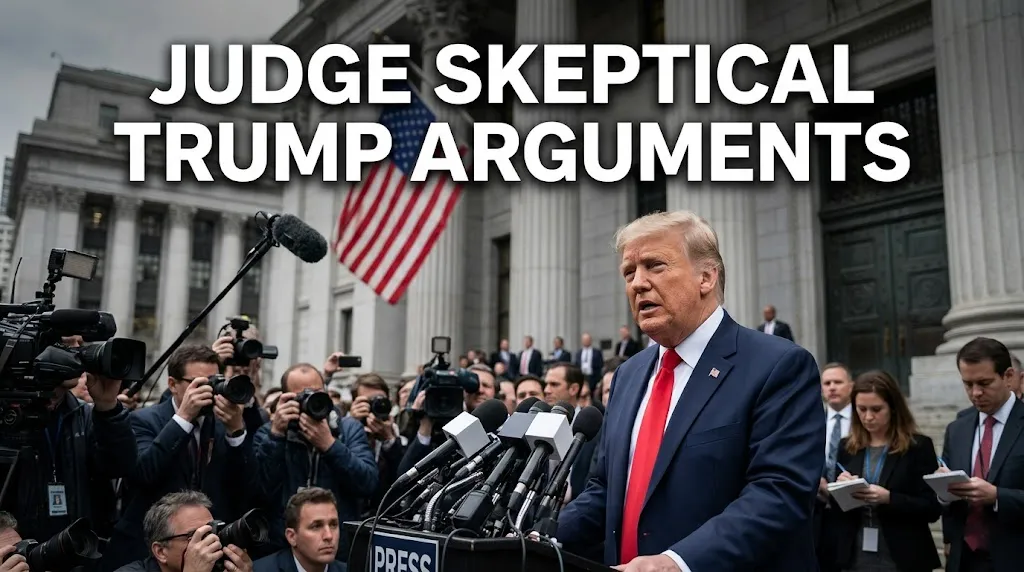
A recent court hearing captured national attention after a judge appeared skeptical of Trump arguments presented by his legal team. The courtroom exchange quickly became a major topic among legal experts, political analysts, and news organizations. As questions from the bench intensified, many observers focused on what the judge’s comments could mean for the future of the case.
While courtroom skepticism does not guarantee a final outcome, it often provides valuable insight into how a judge views the legal issues under consideration. In this case, the hearing highlighted important concerns about legal reasoning, evidence, and the application of existing law.
Why the Hearing Drew National Attention
Judge Skeptical Trump Arguments Cases involving former President Donald Trump continue to receive significant public interest. Every court appearance is closely monitored because of the legal, political, and constitutional issues involved.
During this particular hearing, attorneys representing Trump attempted to defend their position on several key matters. However, the judge repeatedly challenged aspects of their arguments and requested additional clarification.
These exchanges quickly became the focus of media coverage. Many reports highlighted the judge’s concerns and the difficulty Trump’s legal team faced in persuading the court on certain points.
Because the case could have broader implications, legal observers paid close attention to every question raised during the proceedings.
Judge Questions Key Legal Claims
One of the most notable aspects of the hearing was the judge’s detailed questioning. Judges often use hearings to test the strength of legal arguments before making important decisions.
In this instance, the court appeared unconvinced by some of the claims presented by Trump’s attorneys. The judge asked whether the arguments were supported by established legal precedent and whether they aligned with previous court rulings.
Such questioning is common in complex cases. Judges frequently challenge attorneys to explain how their interpretation of the law fits within existing legal frameworks.
When a judge expresses skepticism, it usually means the court wants stronger justification before accepting a particular argument.
Understanding Judicial Skepticism
Judicial skepticism should not be confused with a final ruling. Judges regularly question both sides during hearings as part of their responsibility to fully examine the facts and legal issues.
The purpose of these questions is to identify weaknesses, inconsistencies, or unsupported claims. By doing so, judges can better understand the strengths and limitations of each side’s position.
Legal experts often caution against assuming that skeptical questions automatically indicate how a judge will rule. In many cases, judges challenge attorneys simply to ensure every argument receives careful examination.
However, repeated questioning on the same issue can sometimes suggest that the court remains unconvinced by the answers being provided.
Legal Experts Analyze the Courtroom Exchange
Following the hearing, legal analysts offered different interpretations of the judge’s remarks.
Some experts argued that the judge’s skepticism reflected normal courtroom procedure. According to this view, challenging attorneys is a routine part of evaluating legal claims and should not be viewed as unusual.
Others believed the judge’s comments revealed significant concerns about the legal strategy being used by Trump’s defense team. They noted that several questions appeared to focus on fundamental aspects of the case rather than minor procedural issues.
These differing opinions demonstrate how difficult it can be to predict court outcomes based solely on oral arguments.
Even experienced legal professionals often disagree about the significance of comments made during hearings.
Potential Impact on the Case
The judge’s skepticism may influence how the case develops in the coming weeks and months.
When courts raise concerns during hearings, attorneys typically respond by refining their arguments, presenting additional evidence, or citing more legal authority. Trump’s legal team may choose to strengthen areas that received the most criticism from the court.
The hearing could also affect future motions and legal filings. Issues highlighted by the judge are likely to receive increased attention as both sides continue presenting their cases.
Depending on the court’s eventual ruling, the decision could have implications beyond the immediate dispute. Similar legal questions may arise in future cases, making this proceeding especially important for legal observers.
Public and Political Reactions
As expected, reactions to the hearing varied widely.
Supporters of Trump argued that tough questioning from judges is a normal part of the legal process. They emphasized that skepticism alone does not determine the final outcome of a case.
Critics viewed the judge’s comments differently. They argued that the court’s concerns reflected deeper problems with the legal arguments being presented.
News outlets, commentators, and political analysts spent considerable time discussing the hearing and its potential consequences. The courtroom exchange quickly became one of the most discussed legal developments of the week.
What Happens Next
The legal process is expected to continue with additional filings, arguments, and judicial review. Attorneys on both sides will likely address the concerns raised during the hearing and provide further legal support for their positions.
The judge will carefully examine all submitted materials before issuing any significant ruling. Depending on the outcome, either side could pursue additional legal options, including appeals.
For now, attention remains focused on the court. The phrase “judge skeptical trump arguments” has become a central topic in legal and political discussions, highlighting the importance of the case and the questions currently before the judiciary.
