


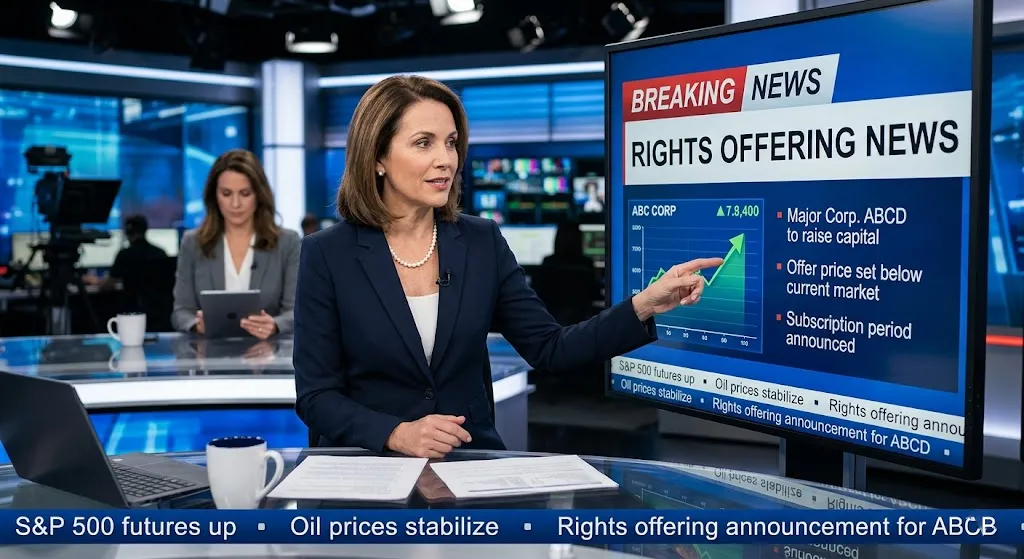
Rights offering news often attracts significant attention from investors, analysts, and financial markets. When a company announces a rights offering, it creates both opportunities and challenges for existing shareholders. Understanding how rights offerings work can help investors make informed decisions and evaluate the potential impact on their investments.
A rights offering is a method companies use to raise additional capital by giving existing shareholders the right to purchase new shares, usually at a discounted price. These announcements frequently become major financial headlines because they can influence stock prices, company valuations, and investor sentiment.
As rights offering news continues to shape financial markets, investors should understand the purpose, benefits, risks, and implications of these corporate actions.
What Is a Rights Offering?
A rights offering is a corporate financing strategy that allows existing shareholders to buy additional shares before the general public. Companies typically issue rights based on the number of shares a shareholder already owns.
For example, a company may offer one new share for every five shares currently held. The purchase price is often lower than the market price, making the offer attractive to shareholders.
The primary goal is to raise capital while giving existing investors the opportunity to maintain their ownership percentage in the company.
Rights offerings are commonly used by businesses seeking funds for expansion, debt reduction, acquisitions, or operational improvements.
Why Rights Offering News Matters
Rights offering news can have an immediate effect on market activity. Investors closely monitor these announcements because they often signal important developments within a company.
A rights offering may indicate that a business is:
- Expanding operations
- Investing in new projects
- Improving financial stability
- Reducing outstanding debt
- Funding acquisitions
- Strengthening its balance sheet
At Time Squares News, some investors may view a rights offering as a sign that a company requires additional funding due to financial challenges.
Because interpretations can vary, rights offering news often leads to increased market volatility and investor discussion.
How Rights Offerings Work
The process typically begins when a company’s board of directors approves the offering. Shareholders then receive rights that allow them to purchase a specific number of new shares.
The rights offering generally includes:
Record Date
The date determining which shareholders are eligible to participate.
Subscription Price
The discounted price at which shareholders can purchase new shares.
Subscription Period
The timeframe during which shareholders can exercise their rights.
Expiration Date
The final date for accepting the offer.
Shareholders may choose to participate, sell their rights if transferable, or allow them to expire.
Benefits for Existing Shareholders
Many investors view rights offerings as an opportunity rather than a challenge.
Discounted Share Purchases
Shareholders can often buy additional shares below the current market price.
Ownership Preservation
Participating helps investors maintain their percentage ownership in the company.
Potential Future Growth
If the company successfully uses the raised capital, shareholders may benefit from long-term value creation.
Investor Priority
Existing shareholders receive the first opportunity to purchase newly issued shares before outside investors.
These advantages explain why rights offerings are frequently welcomed by long-term investors who believe in a company’s future prospects.
Potential Risks Associated With Rights Offerings
While rights offerings offer opportunities, they also involve certain risks.
Share Dilution
Investors who choose not to participate may experience dilution of their ownership percentage.
Stock Price Pressure
The announcement of additional shares can sometimes place downward pressure on stock prices.
Market Uncertainty
Investors may question why the company requires additional capital, leading to mixed market reactions.
Capital Allocation Concerns
The success of the offering often depends on how effectively management uses the raised funds.
Careful evaluation is necessary before making investment decisions related to any rights offering.
How Markets React to Rights Offering News
Market reactions can vary significantly depending on the circumstances surrounding the offering.
If investors believe the capital will be used for profitable growth initiatives, the announcement may be viewed positively. In such cases, confidence in management and future earnings potential can support stock performance.
However, if investors perceive the offering as a response to financial difficulties, the stock may face selling pressure.
Factors influencing market reaction include:
- Company financial health
- Purpose of the capital raise
- Subscription pricing
- Industry conditions
- Management credibility
- Growth prospects
Understanding these factors helps investors interpret rights offering news more effectively.
Evaluating a Rights Offering as an Investor
Before participating in a rights offering, investors should analyze several key areas.
Company Fundamentals
Review revenue growth, profitability, debt levels, and cash flow performance.
Purpose of the Offering
Determine how management plans to use the raised capital.
Market Conditions
Assess broader economic and industry trends.
Valuation
Compare the subscription price with the current market value of the shares.
Long-Term Strategy
Consider whether the offering aligns with the company’s growth objectives.
A thorough evaluation can help investors determine whether participation supports their investment goals.
The Growing Importance of Rights Offering News
In today’s dynamic financial markets, rights offering news remains an important source of information for investors. As companies seek capital to support expansion, innovation, and strategic initiatives, rights offerings continue to serve as a valuable financing tool.
Investors who understand the mechanics and implications of these announcements are better positioned to assess opportunities and manage risks. By monitoring rights offering news and conducting careful analysis, shareholders can make informed decisions that support their long-term investment strategies while staying prepared for changing market conditions.
